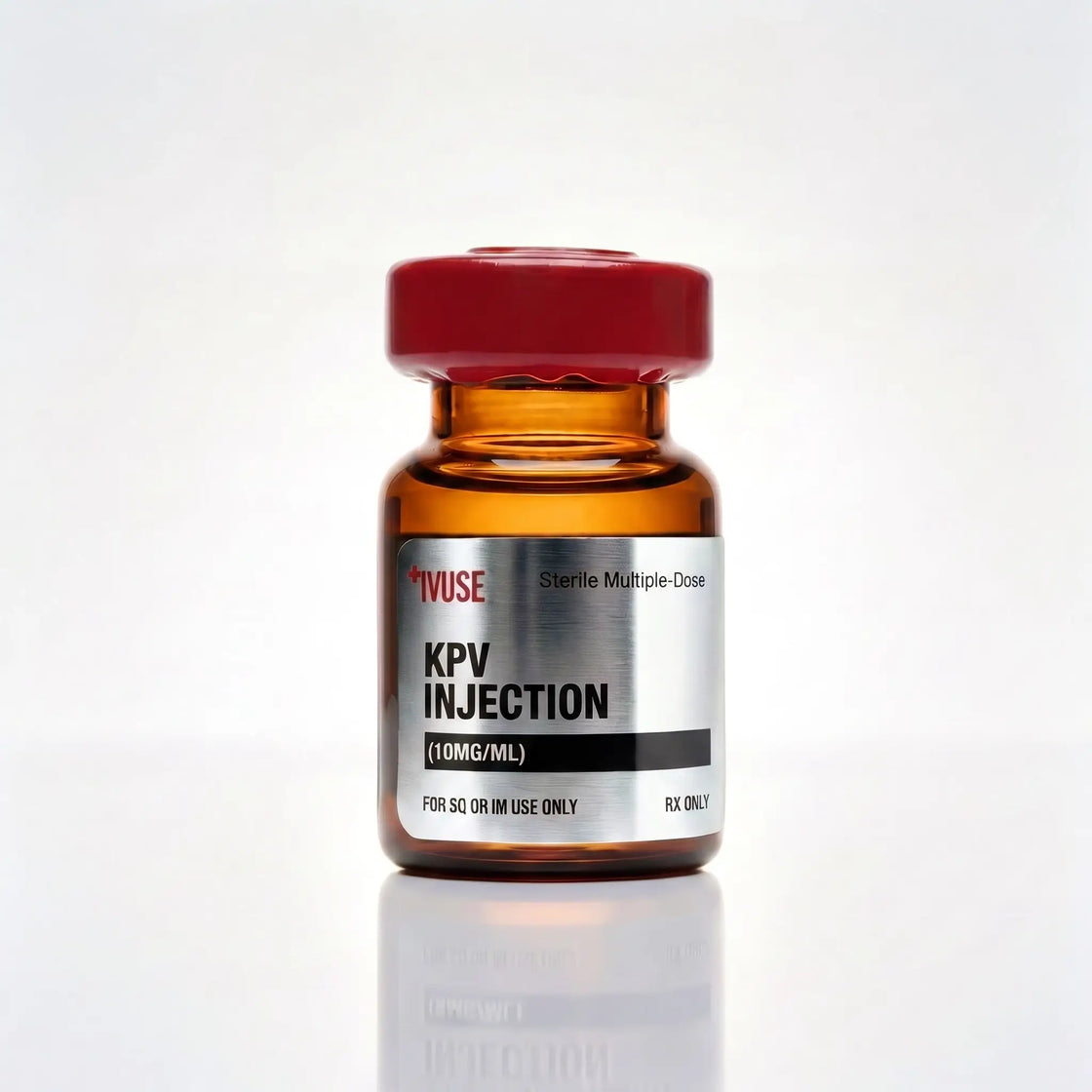
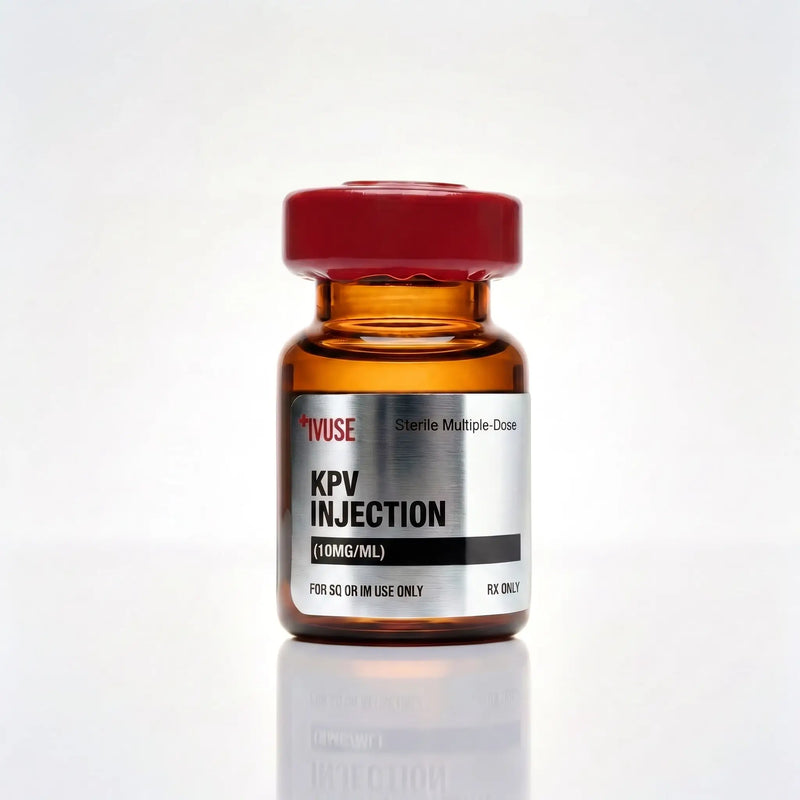
KPV compounded peptide vial, 10 mg/ml, from IVUSE+

KPV

4.2 out of 5
$129.89

Clinician-prescribed. Ships from a licensed U.S. pharmacy.

Compounded KPV is a tripeptide derived from alpha-MSH. It interrupts the NF-kB inflammatory pathway inside the cell, with documented effects on gut and skin inflammation in preclinical research.

10 mg/ml Subcutaneous, daily 503A // 503B compounded
EVERYDAY GUT COMFORT SKIN THAT REACTS LESS NO BROAD IMMUNE SHUTDOWN TARGETS INFLAMMATION AT THE SOURCE
Inflammation goes down. Your defenses stay up.
The Mechanism

Inflammation has one main switch. KPV is small enough to reach it.

LEGACY APPROACH
Systemic anti-inflammatories
Suppresses the whole immune system
Pills every day, often for years
Hard on the stomach, liver, and kidneys
Covers up symptoms downstream
THIS PROTOCOL
Compounded KPV
Targets one inflammatory pathway
Runs as a course, with a planned break
Well tolerated in published research
Works inside the cell itself

Most chronic inflammation runs through one transcription factor, NF-kB. KPV is transported into cells by PepT1, then blocks NF-kB nuclear translocation. Without NF-kB in the nucleus, transcription of TNF-alpha, IL-1, IL-6, and COX-2 drops. The result is a targeted reduction in cytokine output at the cellular level, documented in gut, skin, and immune cell lines. KPV comes from alpha-MSH, the hormone that tells skin to make pigment, but it leaves that job behind. In animals whose pigment receptor did not work at all, KPV still reduced inflammation. The anti-inflammatory effect runs on a separate track from anything that changes your skin tone.
Clinical Data

The Evidence

10 nM
The concentration at which KPV shut down NF-kB and MAP kinase inflammatory signaling in human gut cells.
Dalmasso et al., Gastroenterology, 2008 (PMID: 18061177)
3
Amino acids in the active sequence, Lys-Pro-Val, the piece of alpha-MSH that carries most of its anti-inflammatory activity.
Brzoska et al., Endocrine Reviews, 2008 (PMID: 18483147)
2
Separate mouse models of inflammatory bowel disease, DSS colitis and CD45RB transfer colitis, in which KPV reduced inflammation and MPO activity.
Kannengiesser et al., Inflammatory Bowel Diseases, 2008 (PMID: 18092346)

All of this is laboratory and animal research. Human trials are still limited, and none of these results were produced in people. Talk with your provider about whether KPV fits your case.

What Changes

A gut that stops flaring. Skin that stops reacting.

Patients on a KPV protocol typically report changes in two domains: gut comfort and skin reactivity. The shift is gradual over the first weeks, with most of the observed effect arriving by the end of the course. There is no stimulant effect and nothing to feel acutely. KPV works by lowering how much inflammatory protein the cell transcribes in the first place, which is slower and more specific than blanket immune suppression.

Comparison

Oral Anti-Inflammatories vs. KPV

Oral Anti-InflammatoriesKPV
A pill every day, often for years One injection a day, on a defined course
Suppresses the whole immune system Targets one inflammatory pathway
Hard on the stomach, liver, and kidneys Well tolerated in published research
Hits many pathways at once Works before the inflammatory proteins are made
No defined start or finish A set course with a built-in break
Comparison

Topical Steroids vs. KPV

Topical SteroidsKPV
Thins the skin with long-term use Works inside the skin cell rather than on top of it
Stops working as well over time No loss of response documented in published research
Treats the surface only Lowers the inflammatory proteins the skin is producing
Can only be used on one spot for so long Runs as a defined course with a break
Product Information

Details

Compounded KPV is the C-terminal tripeptide of alpha-melanocyte-stimulating hormone (alpha-MSH), prepared as a 10 mg/ml sterile solution by a licensed 503A/503B compounding pharmacy.

KPV enters cells through the PepT1 di/tripeptide transporter, then blocks NF-kB nuclear translocation. The downstream effect is a reduction in transcription of TNF-alpha, IL-1, IL-6, and other pro-inflammatory cytokines.

Published preclinical research documents activity in intestinal epithelial cells, immune cells, and skin keratinocytes.

KPV is given by daily subcutaneous injection as a defined course, with your provider setting the schedule. Prescribed under an async telehealth model after intake review.

  • Acts on NF-kB, the master switch behind most chronic inflammation
  • Lowers the inflammatory proteins your cells release, including TNF-alpha, IL-1, and IL-6, in published research
  • Researched in both gut and skin, the two places patients report change
  • Inflamed tissue pulls KPV in faster, so it concentrates where it is needed
  • Well tolerated across published research, without broadly suppressing immunity
  • Compounded by a licensed 503A/503B pharmacy, prescribed through async telehealth

Administer by subcutaneous injection into the abdomen, rotating injection sites with each dose to help minimize skin irritation.

Do not inject into areas that are bruised, tender, red, firm, scarred, or otherwise irritated.

Follow the dosing instructions provided by your prescribing provider. Do not increase, decrease, skip, or repeat a dose unless directed by your provider.

If you miss a dose or have questions, contact your prescribing provider for guidance.

Full protocol detail, including how to measure and store each dose, is on the KPV dosing page.

Most commonly reported in published research and clinical case series: injection-site redness, transient itching, mild fatigue, and headache. Antibody formation is theoretically possible with any peptide, though it is not commonly reported with KPV.

Do not use KPV if you have an active malignancy under treatment, are pregnant or breastfeeding, or have a known hypersensitivity to alpha-MSH-derived peptides.

Discuss any autoimmune diagnosis with your provider before starting.

Stop use and contact your provider if you experience persistent rash, swelling, or signs of allergic reaction.

Disclaimer and Transparency

Important Information About Compounded Injectables

  • Compounded medications are not reviewed or approved by the FDA and do not undergo the same pre-market evaluation as FDA-approved drugs.
  • IVUSE peptide injections are prepared using peptide ingredients by FDA-registered, U.S.-licensed 503A & 503B compounding pharmacies, where available and clinically appropriate.
  • Availability and formulation may vary based on state regulations, evolving clinical guidance, and pharmacy partners.

All prescriptions, treatment decisions, and care plans are made independently by licensed healthcare providers using their professional judgment. Images and product depictions are for illustration only; actual packaging and supplies may vary.

*If you are interested in a prescription product, IVUSE will coordinate a telehealth visit with a licensed medical provider who will determine whether you are an appropriate candidate based on your health profile and current standards of care. If approved, a prescription will be issued and filled by one of our partner pharmacies. All prescriptions are subject to provider discretion and clinical appropriateness.

These statements have not been evaluated by the Food and Drug Administration. This product is not intended to diagnose, treat, cure, or prevent any disease. All information provided here is for educational purposes only and does not replace personalized medical advice from a qualified healthcare professional.

Stop the medication and contact your provider if you experience persistent or concerning symptoms. Seek immediate medical care if you develop signs of a severe allergic reaction (such as hives, facial swelling, or difficulty breathing) or any rapidly worsening symptom.

Questions

KPV FAQ

What is KPV?
KPV is a three amino acid peptide, Lys-Pro-Val, that forms the C-terminal end of alpha-MSH. It is the fragment that carries most of alpha-MSH's anti-inflammatory activity without the pigmentation activity. IVUSE+ compounds it at 10 mg/ml through a licensed 503A/503B pharmacy and prescribes it under an async telehealth model.
How does KPV work?
KPV is carried into cells by PepT1, a di/tripeptide transporter that inflamed tissue upregulates. Once inside, it blocks NF-kB from translocating to the nucleus. NF-kB is the transcription factor that drives production of TNF-alpha, IL-1, IL-6, and COX-2, so less of it in the nucleus means less cytokine output. The effect is on how much inflammatory protein the cell makes, upstream of anything you feel.
What does the protocol look like?
Daily subcutaneous injection, run as a defined course followed by a planned break. A single vial covers 28 injections. Your provider sets your dose and confirms the full schedule during your intake review.
Is KPV FDA-approved?
No. KPV is not FDA-approved as a finished drug, and no FDA-approved disease indication exists for it. It is prepared as a compounded medication by a licensed 503A/503B pharmacy against a valid prescription. The active ingredient and the compounding pathway are both legal and regulated.
What does the research actually show?
Published work documents NF-kB inhibition and reduced cytokine secretion at nanomolar concentrations in human intestinal epithelial cells, and reduced colitis severity in animal models. That evidence is preclinical and cell-line. Human clinical trial data remains limited, and we label it that way rather than implying more. Citations appear on this page.
Is KPV the same as alpha-MSH or Melanotan?
No. KPV is the C-terminal tripeptide of alpha-MSH and keeps the anti-inflammatory activity without driving pigmentation. In animals whose pigment receptor did not work at all, KPV still reduced inflammation. Melanotan II is a different molecule that acts at melanocortin receptors specifically to stimulate pigmentation. They are not interchangeable.
KLOW already contains KPV. Why run it on its own?
KLOW blends KPV with GHK-Cu, BPC-157, and TB-500 for broad recovery across skin, joints, and gut. Standalone KPV is for people whose target is the inflammation itself, usually gut comfort or skin reactivity, without the rest of the repair stack. Patients often run KPV alone first and move to KLOW when the goal widens.
What if I miss a dose?
Resume your normal dose the next day. Do not double up to compensate, and do not exceed the maximum your provider set for you. If you miss several days in a row, message your provider through the telehealth portal before restarting.
How do I store the vial?
Refrigerated, between 2 and 8 degrees Celsius. Do not freeze, and keep it out of direct light. Vials are compounded by a licensed 503A/503B pharmacy and shipped cold, so put yours in the fridge on arrival. Each vial carries an expiration date.
Who should not take KPV?
Anyone with an active malignancy under treatment, anyone pregnant or breastfeeding, and anyone with known hypersensitivity to alpha-MSH derived peptides. Discuss any autoimmune diagnosis with your provider before starting. Eligibility is screened during async telehealth review.
After You Order

What happens next

01

Choose Your Protocol

No consultation fee. No hidden costs. No subscription.

02

Complete Your Clinical Intake

A board-certified clinician reviews your health history, medications, and goals. Asynchronous. No appointments. No waiting rooms.

03

Your Prescription Ships

Compounded by a licensed U.S. pharmacy. Delivered to your door in 2-4 business days. Cold-shipped when required.

Clinical Recommendation

Stack Your Protocol

KLOW
Peptide Therapy

KLOW

KLOW is a four-peptide blend that already includes KPV alongside GHK-Cu, BPC-157, and TB-500. Patients running a standalone KPV cycle often transition to KLOW for a broader recovery and skin protocol.

Starting at $208.89
GHK-CU
Peptide Therapy

GHK-CU

GHK-Cu is the copper tripeptide with the longest clinical record in skin repair, driving collagen synthesis and barrier recovery. Patients pair it with KPV when skin reactivity is the target, so tissue rebuilds while the inflammatory load stays controlled.

Starting at $131.89

Target where the inflammation starts.

KPV is prescribed via async telehealth after a clinical intake review, compounded by a licensed 503A/503B pharmacy, and shipped direct. Your provider sets your course during intake.

Compounded medications are not FDA-approved. Statements on this page reference published preclinical and mechanistic research; not all findings have been replicated in human clinical trials. This is not medical advice. Eligibility for KPV is determined by your provider through the IVUSE+ telehealth intake. Pregnant or breastfeeding patients, patients with active malignancy under treatment, and patients with known hypersensitivity to alpha-MSH-derived peptides should not use KPV.

KPV $129.89