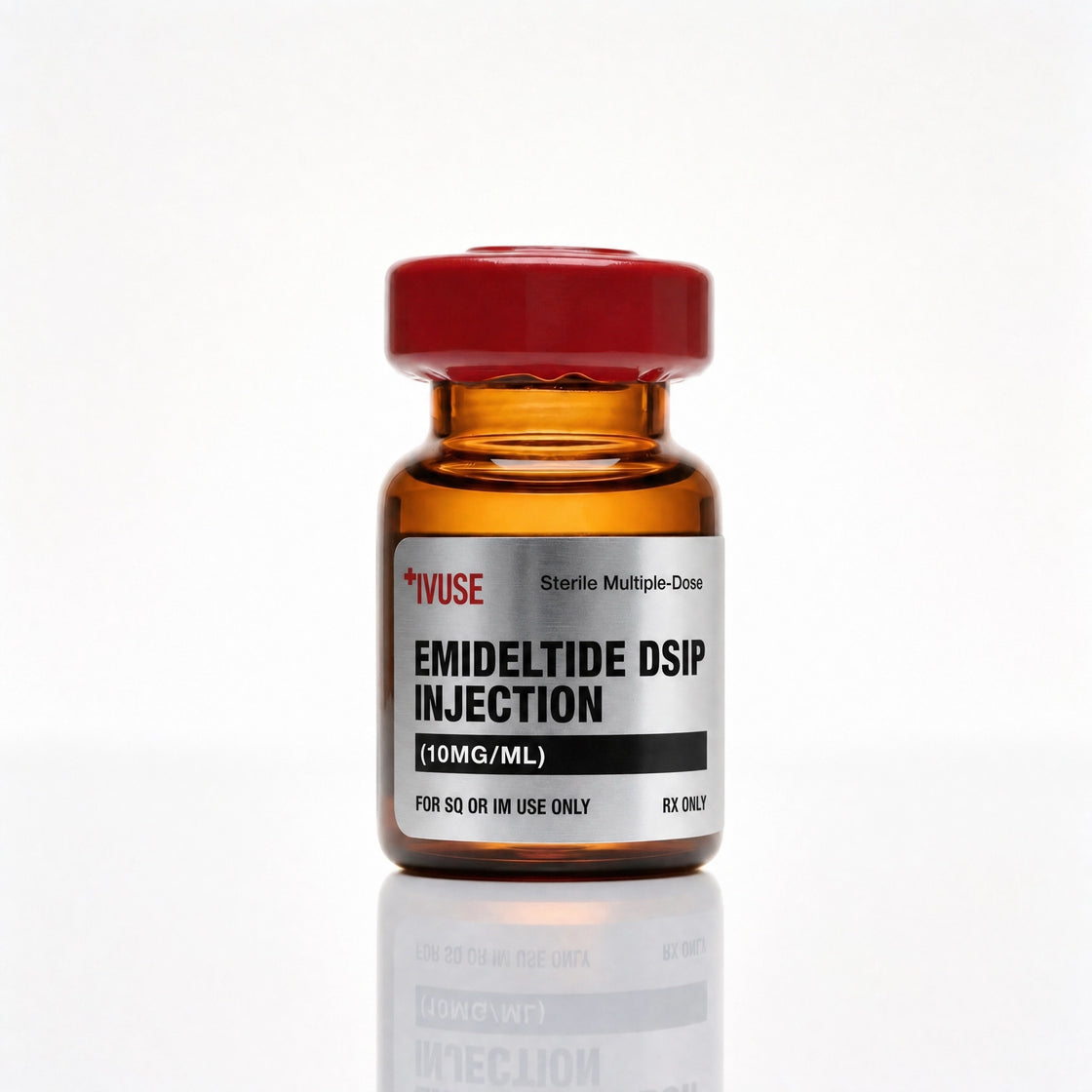
Emideltide DSIP
Clinician-prescribed. Ships from a licensed U.S. pharmacy.
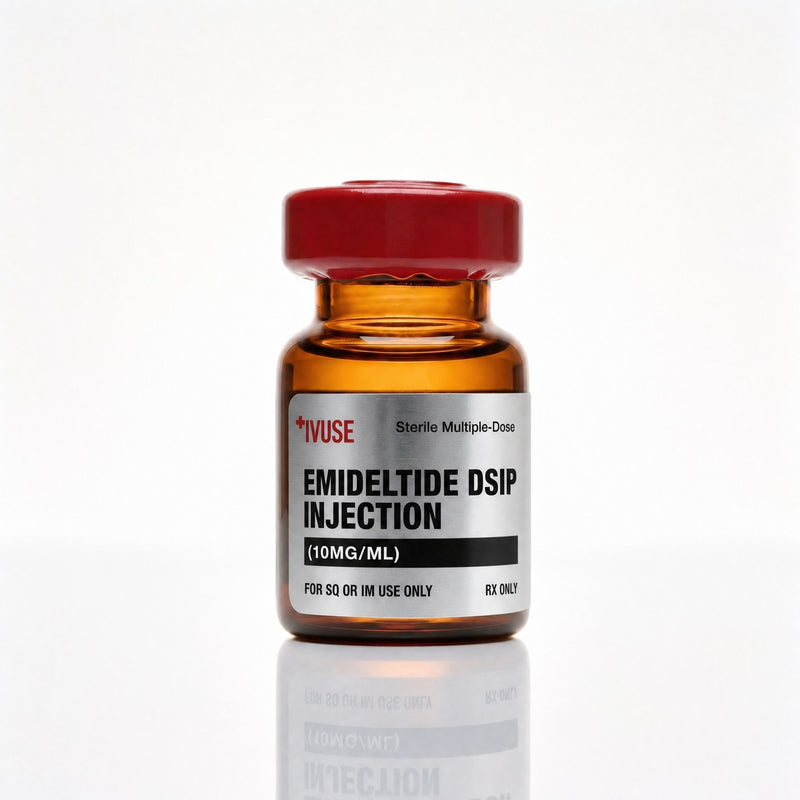
Emideltide is compounded DSIP, a hypothalamic peptide that supports slow-wave sleep depth and quiets the cortisol curve at night. Nightly subcutaneous dose, 12 weeks on, 4 weeks off. Compounded by a licensed 503A/503B pharmacy, prescribed through async telehealth.
Architecture, not anesthesia.
Most sleep aids force unconsciousness by clamping GABA-A receptors. Emideltide takes a different lane. It crosses the blood-brain barrier intact and signals through hypothalamic circuits that govern delta-wave activity, supporting the body's own slow-wave generation while dampening HPA-axis output so ACTH and night cortisol settle. Its activity follows a bell-shaped dose-response curve, which is why the dose is kept deliberately modest. More is not better. Sleep gets deeper because the architecture is allowed to do its job, not overwritten.
Wake up rested. Not knocked out, not foggy. Rested.
The shift is qualitative before it is quantitative. Total sleep time often holds steady. What changes is depth. Slow-wave sleep gets longer, the 3 a.m. cortisol spike softens, and the morning starts in a different gear. Customers describe it as feeling like they actually slept, not like they were sedated. By week four, the pattern is consolidated.
Prescription sleep aids vs. Emideltide
| Prescription sleep aids | Emideltide |
|---|---|
| Zolpidem, eszopiclone, benzodiazepines | Compounded DSIP, prescribed via async telehealth |
| GABA-A receptor activation, forced sedation | Hypothalamic modulation, slow-wave sleep supported |
| REM and stage N3 sleep suppressed | REM preserved, slow-wave sleep extended |
| Tolerance and rebound insomnia on discontinuation | No dependence or rebound documented in human trials |
| Documented dependence and abuse potential | No abuse potential reported in published literature |
| Next-day cognitive impairment common | No sedative hangover reported |
| Schedule IV controlled substance | Compounded under prescription, not scheduled |
Melatonin and OTC sleep aids vs. Emideltide
| Melatonin and OTC sleep aids | Emideltide |
|---|---|
| Melatonin, valerian, diphenhydramine | Compounded DSIP, subcutaneous nightly |
| Shifts sleep timing or sedates via H1 antagonism | Modulates the hypothalamic circuits that govern delta-wave sleep |
| Modest effect on sleep onset, little change to sleep depth | Slow-wave sleep extended, sleep efficiency improved in trials |
| Tolerance to diphenhydramine within days | No tolerance documented across 7-night repeat dosing |
| No effect on cortisol or HPA axis | Lowers ACTH-like immunoreactivity for up to 3 hours post-dose |
| Over-the-counter, unregulated potency | Compounded by a licensed 503A/503B pharmacy, dose verified |
Details
Emideltide is compounded Delta Sleep-Inducing Peptide (DSIP), a nine-amino-acid neuropeptide (sequence WAGGDASGE) first isolated in 1974 from cerebral venous blood during electrical stimulation of the thalamus and chemically synthesized in 1977. It is the same molecule the FDA docket refers to as "Emideltide" in the 2026 503A Bulks List review. Administered as a subcutaneous injection in the evening, Emideltide crosses the blood-brain barrier intact, supports the body's own slow-wave generation, and reduces ACTH-driven cortisol at night. It is not a sedative-hypnotic. It does not activate GABA-A receptors. Human trials report longer slow-wave sleep, preserved REM, no documented dependence, and no sedative hangover. Prescribed by a licensed clinician through async telehealth and compounded by a licensed 503A/503B pharmacy.
- Longer slow-wave (Stage 3 to 4) sleep documented in human trials
- REM sleep preserved, not suppressed
- Reduced nighttime ACTH and cortisol signaling
- No dependence, tolerance, or rebound insomnia documented in published literature
- No next-day sedation reported in clinical trials
- Compounded by a licensed 503A/503B pharmacy, dose verified, prescribed by a clinician
Administer via subcutaneous injection into the abdomen and rotate injection sites with each dose to help minimize skin irritation. Do not inject into areas that are bruised, tender, red, firm, scarred, or otherwise irritated. Follow the dosing instructions provided by your prescribing provider. Do not increase, decrease, skip, or repeat a dose unless directed by your provider. If you miss a dose or have questions, contact your prescribing provider for guidance.
Reported side effects in published human research are limited to transient headache, mild nausea, vertigo, vivid dreams, and short-lived injection site reactions. No dependence, tolerance, or withdrawal has been documented in the peer-reviewed literature. Contraindications: pregnancy, breastfeeding, active malignancy, untreated severe sleep apnea, and known peptide hypersensitivity. Do not combine with prescription sedative-hypnotics, benzodiazepines, or alcohol without clinician oversight. Compounded products may carry immunogenicity risk per FDA guidance. Report any unexpected symptom to your clinician through your IVUSE+ account.
Disclaimer and Transparency
Important Information About Compounded Injectables
- Compounded medications are not reviewed or approved by the FDA and do not undergo the same pre-market evaluation as FDA-approved drugs.
- IVUSE peptide injections are prepared using peptide ingredients by FDA-registered, U.S.-licensed 503A & 503B compounding pharmacies, where available and clinically appropriate.
- Availability and formulation may vary based on state regulations, evolving clinical guidance, and pharmacy partners.
All prescriptions, treatment decisions, and care plans are made independently by licensed healthcare providers using their professional judgment. Images and product depictions are for illustration only; actual packaging and supplies may vary.
*If you are interested in a prescription product, IVUSE will coordinate a telehealth visit with a licensed medical provider who will determine whether you are an appropriate candidate based on your health profile and current standards of care. If approved, a prescription will be issued and filled by one of our partner pharmacies. All prescriptions are subject to provider discretion and clinical appropriateness.
These statements have not been evaluated by the Food and Drug Administration. This product is not intended to diagnose, treat, cure, or prevent any disease. All information provided here is for educational purposes only and does not replace personalized medical advice from a qualified healthcare professional.
Stop the medication and contact your provider if you experience persistent or concerning symptoms. Seek immediate medical care if you develop signs of a severe allergic reaction (such as hives, facial swelling, or difficulty breathing) or any rapidly worsening symptom.
What happens next
Choose Your Protocol
No consultation fee. No hidden costs. Single vials or a full 12-week cycle.
Complete Your Clinical Intake
A board-certified clinician reviews your health history, medications, and goals. Asynchronous. No appointments. No waiting rooms.
Your Prescription Ships
Compounded by a licensed U.S. pharmacy. Delivered to your door in 2-4 business days. Cold-shipped when required.
Stack Your Protocol
Epitalon
Epitalon and Emideltide both run at night. Epitalon supports pineal-axis signaling and circadian rhythm. Emideltide supports the slow-wave sleep that rhythm allows.
KLOW
KLOW is the four-molecule recovery stack. Pair with Emideltide when the goal is full-system overnight recovery, deeper sleep, and tissue repair on the same cycle.
Sleep that does the actual work.
Compounded Emideltide, prescribed by a licensed clinician through async telehealth, dispensed by a licensed 503A/503B pharmacy. One nightly subcutaneous dose. 12 weeks on, 4 weeks off. The price is the price.
Emideltide (DSIP) is a compounded preparation and is not FDA-approved for any indication. It is prescribed at the discretion of a licensed clinician based on patient history. Not for use in pregnancy, breastfeeding, active malignancy, untreated severe sleep apnea, or known peptide hypersensitivity. Do not combine with prescription sedative-hypnotics, benzodiazepines, or alcohol without clinician oversight. Report any unexpected symptoms through your IVUSE+ account.